How to Start a Low-Waste Routine With Young Kids
Every low-waste guide I read when my first was born assumed I had time to make my own oat milk.
With four kids, I don’t. What I do have is a handful of habits that stuck because they were easier than the alternative, not harder.
Here’s how to build them without turning your household into a project. 🦢
Step 1: Look in Your Bin Before You Buy Anything
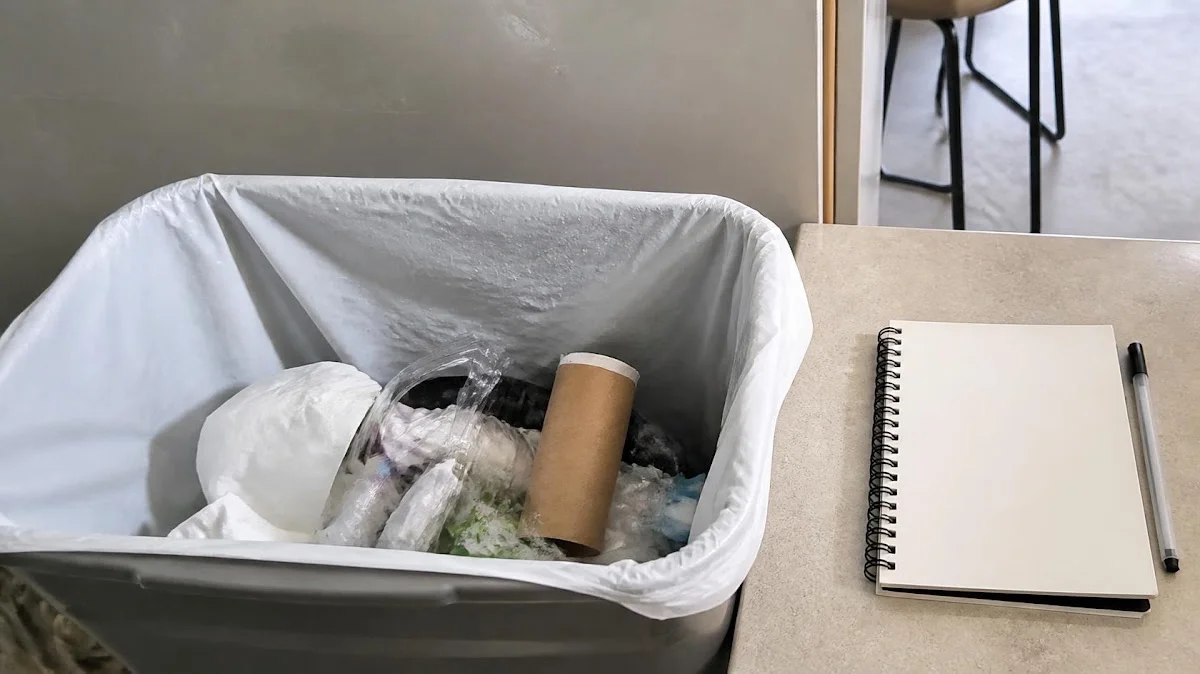
For one week, notice what’s actually in there. Not what you feel guilty about — what’s physically there in volume.
For most families with young kids it’s some combination of food packaging, wipes, and snack wrappers. Your bin tells you where to start, and it’s usually not where the internet says.
Step 2: Change One Thing, Not Ten
Pick the single biggest item from step one. Just that.
Ten simultaneous changes collapse within two weeks. One change that becomes automatic frees up attention for the next one.
Step 3: Make the New Habit Physically Easier Than the Old One
This is the step that determines whether anything sticks.
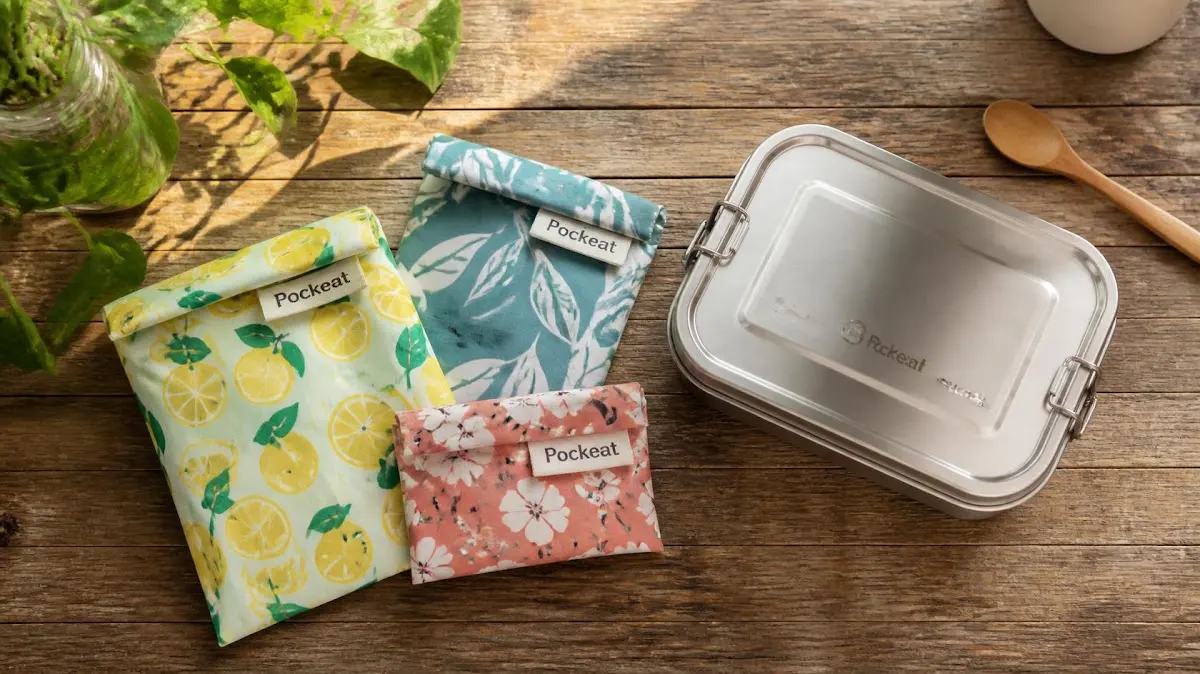
🛒 Shop: Reusable Cloth Snack Bags
🛒 Shop: Cloth Napkins Set (Cotton)
If cloth napkins live in a drawer across the room and paper towels sit on the counter, you’ll use paper towels. Move the cloth ones to where the paper ones were. Put the paper ones in the cupboard.
Willpower loses to convenience every time. Change the layout instead.
Step 4: Give Kids One Real Job
Not a lecture about the planet. A specific task they own.
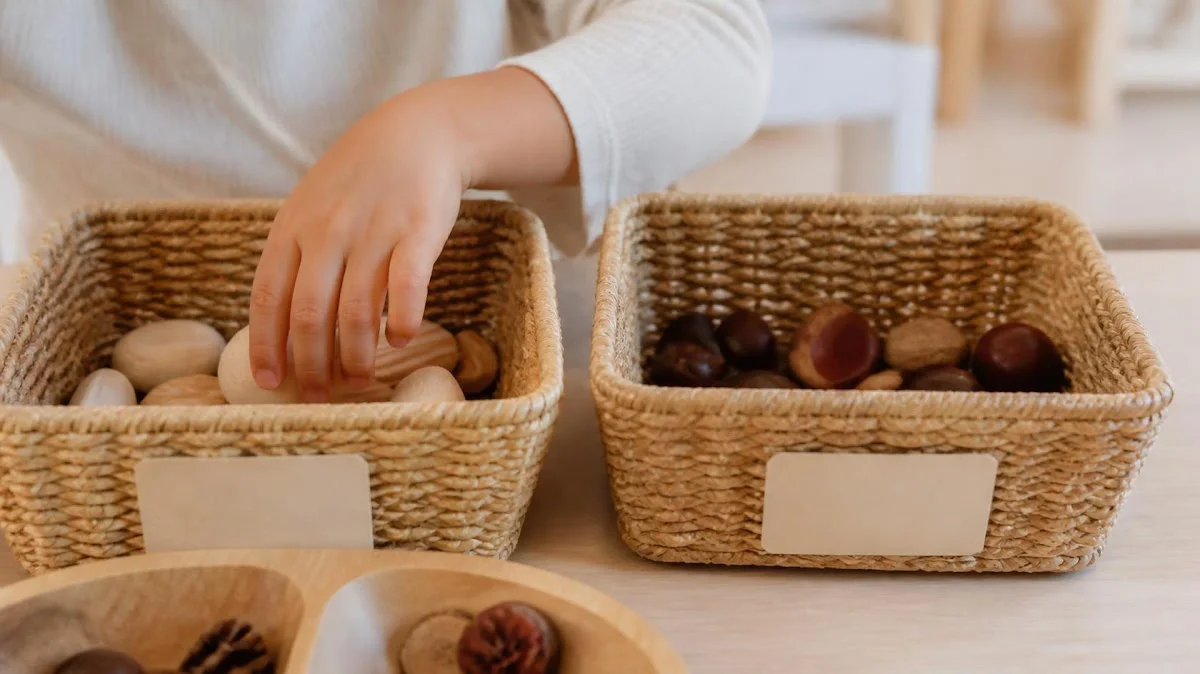
Carrying compost scraps to the bin. Sorting recycling into two baskets. Choosing which cloth bag to bring to the shop.
Kids under six respond to being useful, not to being informed.
Step 5: Start Composting the Lazy Way
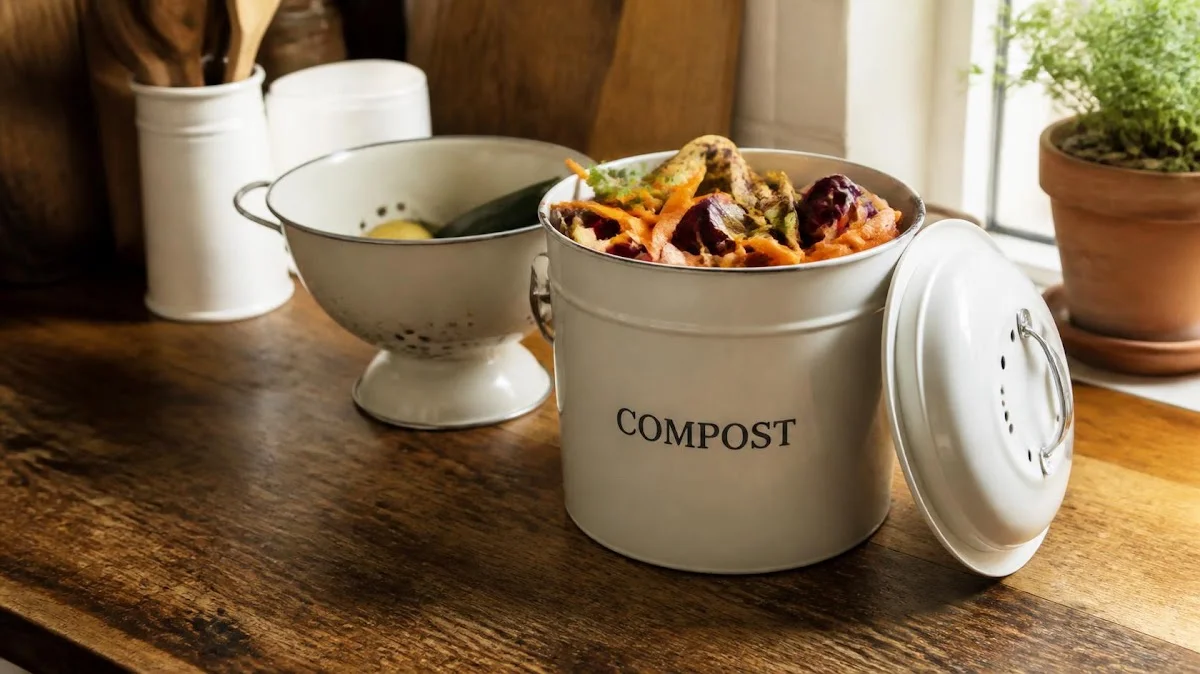
A small lidded bin on the counter, emptied every couple of days. Nothing else.
🛒 Shop: Countertop Compost Bin
If you have a garden, a simple pile works. If you don’t, most cities have drop-off points or a neighbour with a compost heap who’d take it.
Food scraps are usually the heaviest thing in a family’s bin, so this one change moves the most weight.
Step 6: Learn One Repair
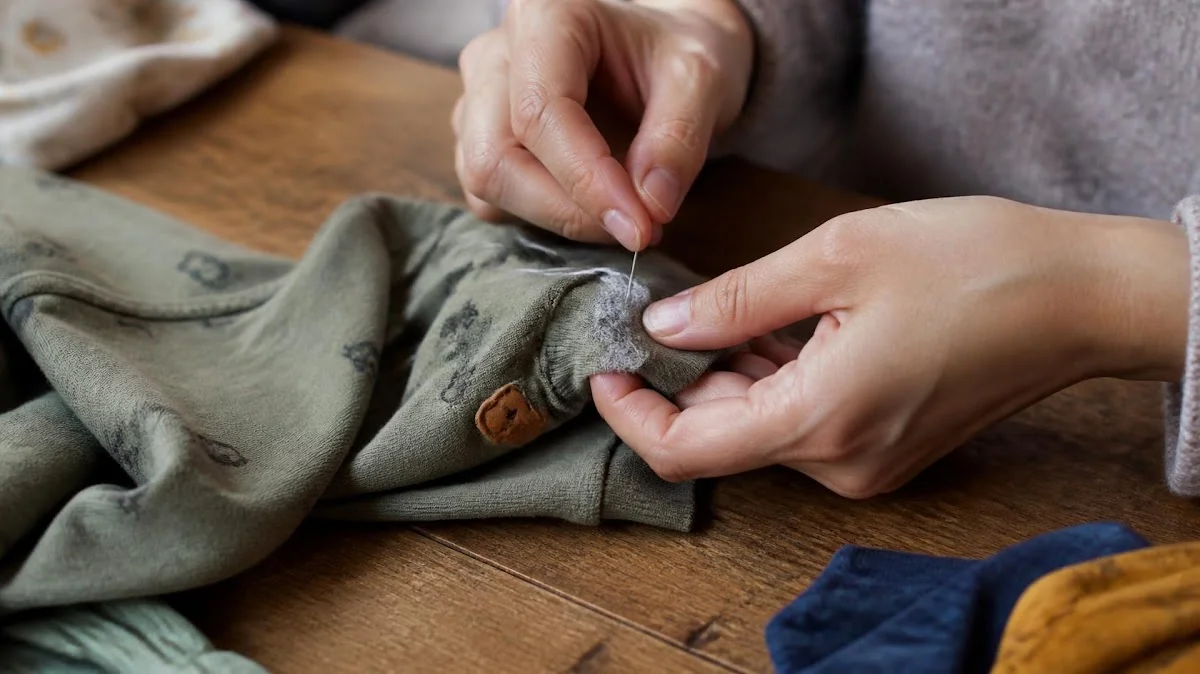
A knee patch. A button. A hem. One skill, learned once, extends the life of a lot of clothing.
🛒 Shop: Visible Mending Kit (Embroidery Patches)
Do it where your kids can watch. Watching something get fixed instead of replaced teaches more than any conversation about consumption.
Step 7: Buy Secondhand First for Things They’ll Outgrow
Kids grow out of clothes and toys before wearing them out. Local parent groups, resale apps, and hand-me-down chains cover most of it.
This saves more money than every other step combined, which matters more than the environmental argument for most families.
What Doesn’t Work
- Throwing out plastic to buy sustainable replacements. That’s consumption with better branding.
- Guilt as a motivator. It burns out in about three weeks.
- Starting during a hard season. New baby, illness, moving — wait.
- All-or-nothing thinking. A household that reduces waste by a third and keeps it up beats one that goes zero-waste for a month.
Final Thoughts
Low-waste with young kids isn’t about doing it properly. It’s about a few habits that outlast your enthusiasm.
Look in the bin this week. Change one thing next week. That’s the whole method. 🦢