How to Create a Calm-Down Corner That Actually Works
Most calm-down corners fail for one reason: the child thinks it’s a punishment.
If the only time your kid goes there is mid-meltdown, when you’re frustrated and they’re overwhelmed, they’ll learn to associate that corner with being in trouble. Then they’ll refuse to go.
Here’s how to build one they’ll actually choose on their own.
What a Calm-Down Corner Is (and Isn’t)
It is: a soft, quiet place a child can go when their feelings get too big. Chosen freely. No time limit.
It isn’t: a time-out spot, a consequence, or somewhere you send them.
That distinction is the whole thing. Everything else is decoration.
Step 1: Pick the Right Spot
You need about one square meter. A corner works best — two walls create natural enclosure, which is calming for a nervous system in overdrive.
Choose somewhere slightly out of the main flow of the room, but not isolated. Your child shouldn’t feel banished or watched.
Low-traffic corner of the bedroom or living room, both work.
Step 2: Make It Physically Soft
Layer in comfort:
🛒 Shop: Weighted Blanket for Kids
🛒 Shop: Small Floor Cushion for Kids
- A floor cushion, small pouf, or bean bag
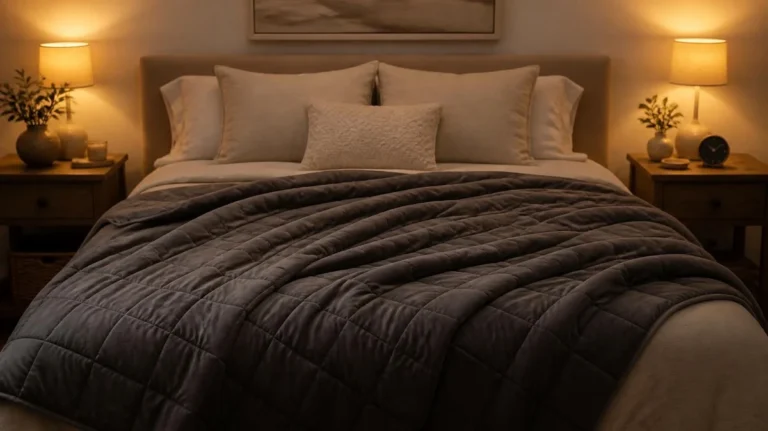
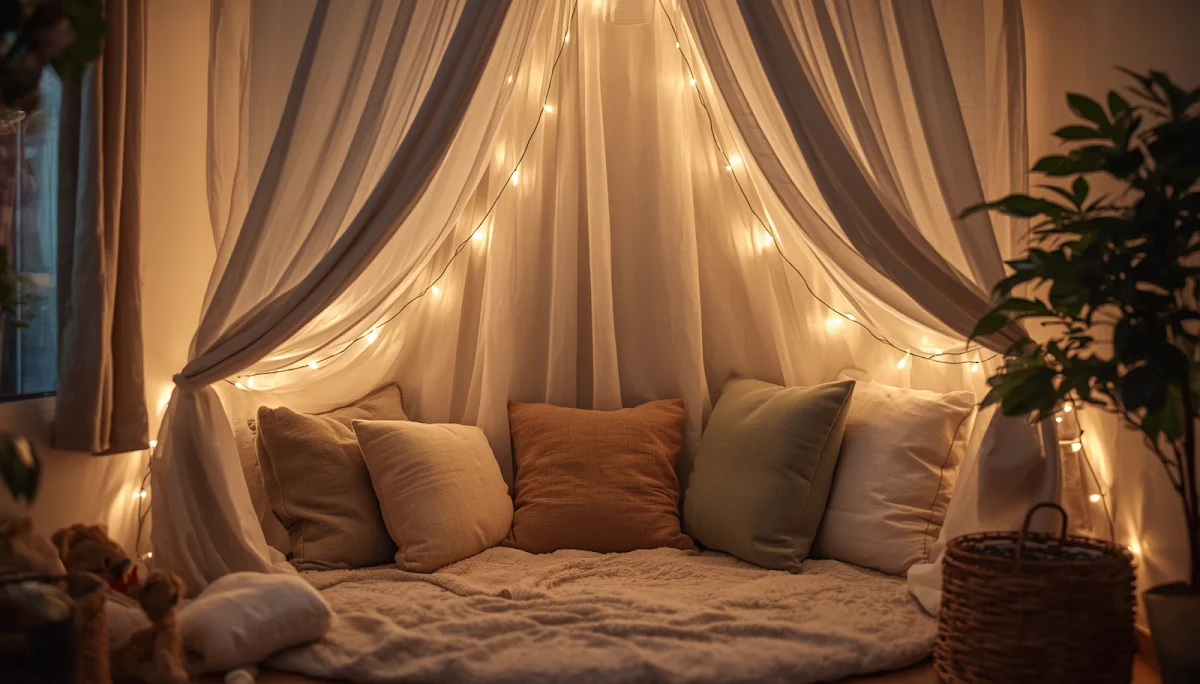
- A weighted blanket or heavy knit throw (deep pressure genuinely calms the nervous system)
- A soft rug underneath
- Optional: a canopy hung from the ceiling for enclosure
Total cost can be under $50 if you use what you already have.
Step 3: Get the Lighting Right
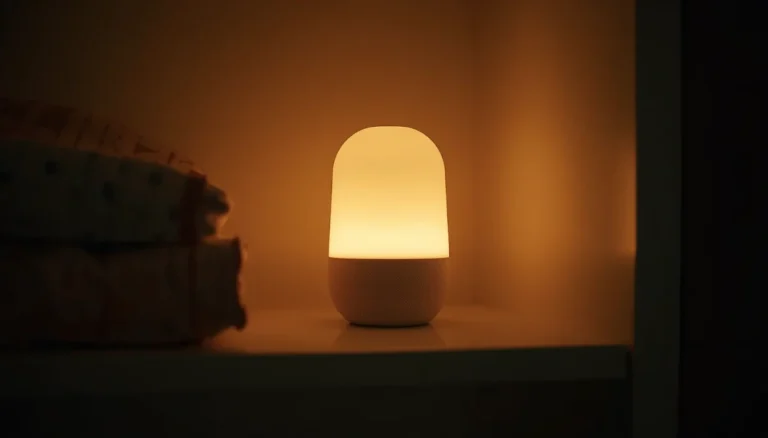
Overhead lighting is activating. Soft, warm, low light is calming.
🛒 Shop: Small Cotton Canopy Tent
A small battery lamp, a strand of warm fairy lights, or a salt lamp all work. Avoid anything blue-toned or bright.
If the corner is near a window, a sheer curtain that filters daylight is ideal.
Step 4: Add Two or Three Calming Tools
Not more than three. A basket of twelve fidget toys is a stimulation station, not a calm corner.
Good options:
- A squishy ball or soft sensory object
- A book about feelings
- A small glitter jar to watch settle
- A stuffed animal designated as the “calm friend”
What doesn’t belong: screens, noisy toys, or anything that stimulates rather than soothes.
Step 5: Introduce It on a Good Day
This is the step that determines whether the whole thing works.
Build it together on a calm afternoon. Let your child help choose the cushion or arrange the items. Sit in it with them. Read a book there. Have a snack there.
Say something like: “This is your cozy spot. You can come here any time you want to feel calmer.”
Do this several times before there’s ever a meltdown.
Step 6: Use It Correctly in the Moment
When big feelings hit, offer — don’t order.
“Would you like to go to your cozy corner?” not “Go to your corner.”
If they say no, that’s fine. Don’t force it. Sometimes offer to go together: “Can I sit there with you?”
Let them decide when to leave. No timer, no “come out when you’ve calmed down.”
Step 7: Model It Yourself
This one is underrated.
Let your child see you use it. “I’m feeling frustrated, I’m going to sit in the cozy corner for a minute.”
Kids learn emotional regulation by watching, not by being told. Seeing an adult take a break to self-regulate teaches more than any conversation about feelings.
Why Corners Fail
- Used as punishment. Instantly ruins it.
- Introduced during a meltdown. Too late to build a positive association.
- Too many items. Overwhelm defeats the purpose.
- Time limits imposed. Removes the child’s sense of control, which is the point.
Final Thoughts
A calm-down corner isn’t about making big feelings go away faster. It’s about giving your child somewhere to have them safely.
Build it on a good day. Use it gently. Let them lead.
Save this post for when you’re ready to set one up. 🦢