How to Rotate Toys Without Overwhelming Your Toddler
My kids have too many toys. Yours probably do too.
The strange part is that more toys usually means less play. A child faced with forty options tends to touch each one for thirty seconds and then wander off. A child faced with five will build something.
Toy rotation fixes this. Here’s how to actually set it up.
What Toy Rotation Is
You keep a small number of toys out and accessible. Everything else lives in storage. Every week or two, you swap some out.
That’s the whole system. The magic is in the details of how you do it.
Step 1: Gather Everything in One Place
Every toy, from every room. Dump it all in one spot.
This part is genuinely unpleasant and takes about an hour. Do it when your child isn’t around — watching their entire toy collection get sorted is too much for a toddler.
Step 2: Sort Into Four Piles
- Broken or missing pieces — throw away
- Outgrown — donate or store for a younger sibling
- Never played with — donate; if it hasn’t been touched in three months, it won’t be
- Keep — everything else
Most families cut their collection by 30–50% at this step alone.
Step 3: Sort the Keepers by Type
Group the remaining toys into categories:
- Building (blocks, magnetic tiles, stackers)
- Pretend play (kitchen, dolls, animals, dress-up)
- Fine motor (puzzles, threading, sorting)
- Art supplies
- Books
- Gross motor (balls, ride-ons, climbing)
This matters because a good rotation includes one item from each category, not five building sets at once.
Step 4: Build Your First Rotation
Choose 5–8 items total. One from each category.
🛒 Shop: Labeled Toy Storage Bins
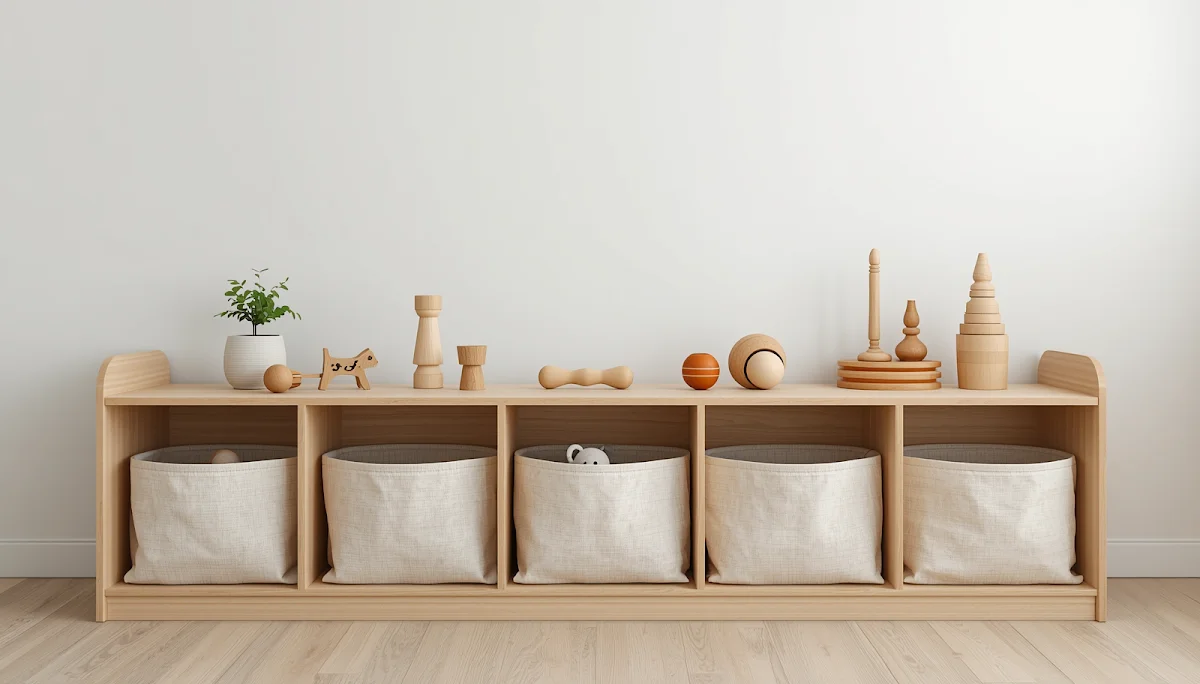
Place them on open shelves at your child’s height, spaced out with room between them. Each toy should be visible and reachable without asking for help.
Everything else goes into labeled bins in a closet, under a bed, or in the garage.
Step 5: Set a Rotation Rhythm
Every 1–2 weeks, swap out 2–3 items. Not everything at once.
🛒 Shop: Woven Baskets for Toy Storage
Keeping some toys constant gives your child continuity. Swapping a few keeps things fresh. Total swap time: about five minutes.
The exception: if your child is deeply engaged with something, leave it. A toy being used daily doesn’t need rotating out just because it’s been two weeks.
Step 6: Watch and Adjust
Pay attention to what gets used and what gets ignored.
If something sits untouched through two rotations, it might be too advanced, too simple, or just not interesting to your child. Consider donating it.
If something is played with constantly, that’s information too — it tells you what kind of play your child is drawn to right now.
What Makes Rotation Fail
- Too many toys out. If you’re putting out fifteen items, you haven’t rotated, you’ve reorganized.
- Rotating too often. Daily changes prevent deep play. Weekly is plenty.
- Making it a big announcement. Just swap quietly. Discovery is part of the appeal.
- Storing toys where kids can see them. Clear bins in view defeat the purpose. Out of sight matters.
Final Thoughts
The first week after a rotation setup usually surprises parents. Kids play longer, ask for help less, and clean up faster because there’s less to clean.
You don’t need to buy anything. You probably need to put most of it away.
Save this and set aside one afternoon. 🦢